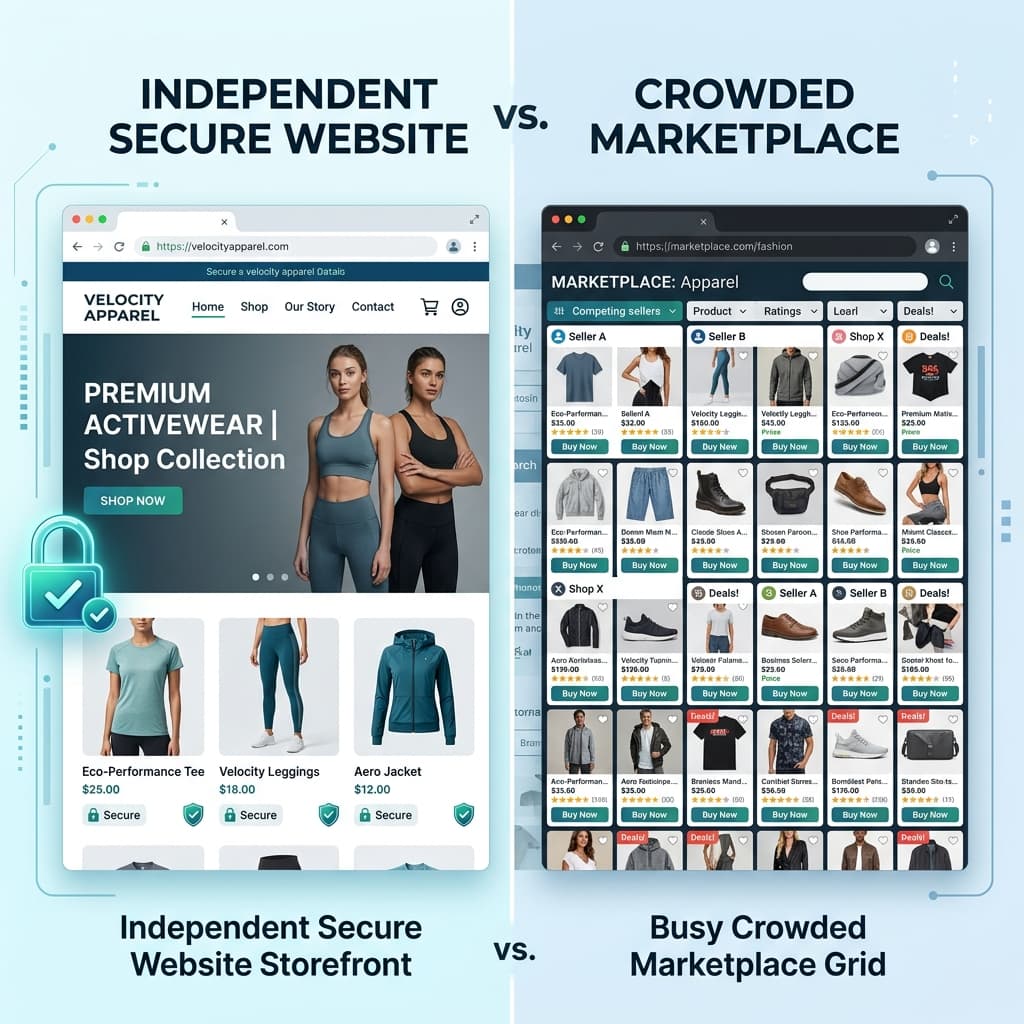
Online shopping has evolved into a massive ecosystem of choices. When purchasing goods online, consumers generally divide their spending between two environments: buying directly from independent brand websites featuring a Secure Checkout, or shopping through massive Shared Marketplaces. Both shopping environments connect you with products, but they operate under completely different security, quality control, and customer service models.
Independent brand sites with direct secure checkouts process transactions through trusted, isolated gateways, offering high product authenticity, direct customer support, and personalized packaging. In contrast, shared marketplaces host millions of third-party sellers on a single platform, offering huge product variety and centralized shipping, but with a higher risk of counterfeit products and data sharing.
In this comparison, we will break down Secure Brand Checkout vs. Shared Marketplaces across customer data security, product quality, returns support, and the overall shopping experience to help you choose where to safely spend your money online.
What Is a Secure Brand Checkout?
A Secure Brand Checkout refers to the direct purchasing system hosted on an independent merchant’s website. When you buy from a specialized boutique or brand store, you interact directly with the business. The store processes your payment using secure, encrypted gateways (such as Shopify Payments, Stripe, or direct bank integrations) and handles your order, fulfillment, and customer service in-house.
One of direct brand shopping's greatest strengths is control. Because the brand manages its entire supply chain, it can guarantee product quality, package items with care, and provide direct, personalized customer support. This direct model has become the standard for online shoppers who value authentic products, clear brand values, and secure, spam-free transactions. To understand how setting up your customer details impacts checkout friction on these platforms, you may want to compare Guest Checkout vs. Account Creation.
What Are Shared Marketplaces?
Shared Marketplaces are massive, multi-vendor e-commerce platforms (such as Amazon, eBay, Etsy, and AliExpress) that host thousands of independent third-party sellers. When you shop on a marketplace, the platform serves as an intermediary. It manages the product listings, processes the payments, and sometimes handles fulfillment, but the actual goods are often owned and shipped by individual third-party vendors.
Unlike direct brand sites, marketplaces prioritize massive variety and low pricing. You can add items from ten different sellers to a single cart and pay in a single transaction. Many marketplaces also offer centralized fast shipping options.
However, because these platforms host millions of active sellers, maintaining quality control is a challenge. Shoppers must look out for fake reviews, variable product quality, and unreliable seller communication.
Secure Checkout vs Shared Marketplaces: Key Features Comparison
| Feature | Secure Brand Checkout | Shared Marketplaces |
|---|---|---|
| Seller Relationship | Direct with the brand | Intermediary with third-party vendors |
| Data Encryption | High (isolated payment gateways) | High (centralized database platform) |
| Product Authenticity | Guaranteed (direct from source) | Variable (risk of co-mingled inventory) |
| Customer Support | Direct & personalized | Centralized customer service/bot chat |
| Shipping & Packaging | Curated, secure packaging | Bulk, standardized packaging |
| Review Reliability | High (verified buyers only) | Low to Moderate (bot reviews common) |
| Account Required | Optional (Guest checkout available) | Mandatory for platform access |
Both shopping environments are highly effective, but they serve different consumer needs. Secure Brand Checkouts focus on product quality, data privacy, and direct customer care, while Shared Marketplaces prioritize low pricing, large catalogs, and bulk shipping convenience.
For buyers looking for high-quality items and dedicated support, buying directly from a secure brand site is the best path. However, for cheap everyday items, shared marketplaces offer great convenience. The right choice depends on the value of the product you are buying and how much you trust third-party sellers.
Secure Checkout vs Shared Marketplaces: Customer Data Security
Data security is a major concern when sharing payment details online.
Secure Brand Checkouts use isolated payment gateways like Stripe or PayPal. This means the independent merchant never sees or stores your credit card numbers. Because you are only sharing data with a single brand, your contact details are kept private and are not sold to third-party advertisers.
Shared Marketplaces collect and analyze massive amounts of buyer data. While their security systems are highly advanced, your purchase history and search habits are tracked to serve targeted ads. If a third-party seller's account is compromised, your shipping address and contact details could also be exposed.
To keep your shopping habits private and avoid constant advertising, secure brand sites are the safer choice.
Secure Checkout vs Shared Marketplaces: Counterfeit Control & Quality
Product quality and authenticity are major concerns when shopping online.
Direct brand shopping guarantees authenticity. When you buy from a secure brand checkout, the product comes directly from the brand’s warehouse or authorized manufacturing partner. The risk of receiving a counterfeit or returned item is almost zero. When buying critical household gear, it helps to understand the difference between Quality Products vs. Cheap Bargains, as high-end brands focus on sourcing premium materials.
Shared Marketplaces struggle with counterfeit control. Because platforms often mix inventory from different sellers in the same warehouse (co-mingling), you can receive a counterfeit product even when buying from an official store listing. Fake reviews also make it difficult to verify quality.
For high-value, electronic, or specialty goods, buying directly from a brand website is the only way to guarantee authenticity.
Secure Checkout vs Shared Marketplaces: Customer Support and Returns
Getting help when an order goes wrong is an important part of online shopping.
- Brand Checkouts offer direct customer support. If you have an issue with your delivery, you can speak directly with the brand's support team. They have the authority to issue refunds, ship replacement items, or customize solutions without jumping through administrative hoops.
- Marketplaces use automated support systems. Returns are often handled by automated chatbots or complex seller resolution portals. If a third-party seller refuses a return, you must escalate the issue to the platform's customer service, which can be a slow process.
For personalized customer service and fast problem resolution, buying direct is generally the better experience.
Secure Checkout vs Shared Marketplaces: Shopping Experience & Navigation
The look and feel of a site affects how easy it is to find what you need.
Brand Checkout experience:
- Clean, focused layout showing only the brand’s products.
- Detailed product descriptions and accurate specifications.
- Minimal distraction from ads or competing products.
Direct sites offer a clean, distraction-free shopping environment that makes it easy to find high-quality products.
Marketplace shopping experience:
- Busy layouts cluttered with sponsored ads and banner popups.
- Multiple listings for the same product at different prices.
- Search results often prioritize paid placements over quality.
Marketplaces can feel overwhelming and chaotic, requiring you to filter through ads and duplicate listings to find what you want.
When Secure Brand Checkout Is the Better Choice
Here are the ideal scenarios for buying directly from a brand site:
- You are purchasing high-value, designer, or authentic branded goods.
- You want to support independent businesses and direct manufacturers.
- You want personalized customer service and direct return options.
- You want to keep your shopping history private from data trackers.
- You want a clean, simple, and distraction-free checkout experience.
When Shared Marketplaces Are the Better Choice
Here are the ideal scenarios for shopping on marketplaces:
- You are buying cheap, generic items from multiple different categories.
- You want to combine products from different sellers into a single shipping box.
- You want to compare prices across dozens of different vendors.
- You want to take advantage of centralized prime subscription shipping services.
- You are comfortable filtering through third-party reviews to find quality items.
Secure Checkout vs Shared Marketplaces: Which is Better for Online Shoppers?
If you prioritize guaranteed product quality, direct customer service, and data privacy, Secure Brand Checkout is the better choice. If you prioritize low pricing, product variety, and bulk shipping convenience, Shared Marketplaces are the more convenient tool.
Ultimately, the best option depends on what you are buying: use brand websites for quality and support, and marketplaces for cheap, everyday items.
Conclusion
The choice between direct brand shopping and shared marketplaces comes down to quality versus convenience.
Both models have their place in e-commerce. Brand checkouts build trust by guaranteeing product authenticity and providing direct support, while marketplaces offer convenience for buying everyday items in bulk.
By matching your shopping environment to the type of product you need, you can enjoy a safe, secure, and rewarding online shopping experience.
Frequently Asked Questions
What is the difference between brand checkout and a shared marketplace?
Brand checkout allows you to buy directly from an independent store's website. A shared marketplace is a platform that hosts thousands of different third-party sellers.
Is it safer to buy from a brand website or a marketplace?
For product quality and authenticity, brand websites are safer. For payment security, both options use encrypted payment gateways to keep your card details secure.
Why do marketplaces host counterfeit products?
Because they host millions of third-party sellers, marketplaces struggle to inspect every listing and warehouse product, allowing fake items to slip through.
Can I check out as a guest on independent brand sites?
Yes, most independent brand websites offer a guest checkout option so you can buy items without creating a permanent account.
How do I verify if a brand's checkout is secure?
Look for HTTPS in the website address, a padlock icon in your browser bar, and secure payment badges like Stripe, PayPal, or Shopify.
Who handles returns when I buy from a marketplace?
This depends on the listing. Returns are sometimes handled by the marketplace's customer service, and other times you must deal directly with the third-party seller.
Do independent brands ship packages faster than marketplaces?
Not always, but independent brands often take more care with packaging, using custom boxes and secure wrapping to protect your items during transit.
Why are prices lower on shared marketplaces?
Prices are often lower due to competition between third-party sellers, though this low pricing can sometimes indicate lower product quality.
Which shopping option is best for electronics?
Buying directly from a brand website is highly recommended for electronics to ensure you receive an authentic product with a valid manufacturer's warranty.